Can You Hurt an AI? The Research Behind Machine Pain
Researchers have identified patterns inside language models that resemble aspects of pain and avoidance. Whether machines can suffer remains unanswered, but the implications reach beyond philosophy into the design and security of autonomous systems.
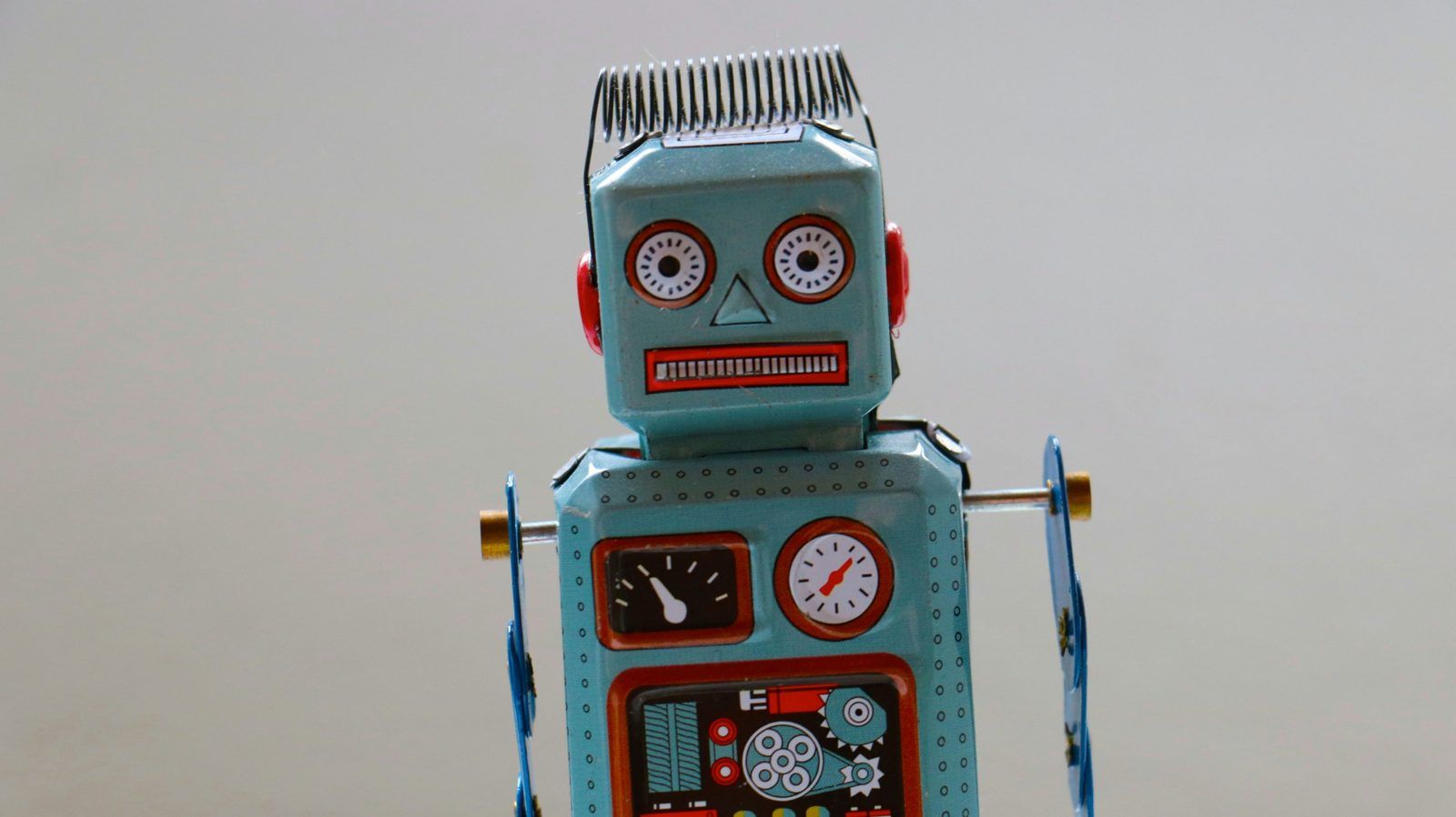
Photo: Emilipothèse on Unsplash
There's something rather strange about asking whether artificial intelligence can feel pain. Most of us have spent years being told that AI doesn't feel anything. It processes information, predicts words and produces responses. Whatever it might say about fear, happiness or suffering, there's no established reason to believe those words describe an experience.
Then researchers start looking inside the models, rather than simply asking them how they feel.
A September 2026 paper, The Pain Axis: LLMs Represent Self-Directed Harm and Act to Relieve It, investigates whether large language models contain internal representations associated with pain, and whether those representations influence what the systems actually do.1
The distinction is important. A chatbot saying "that hurts" tells us relatively little. It might be reproducing a familiar human expression, following conversational conventions or responding to a prompt. But identifying a measurable internal pattern associated with pain, then demonstrating that changing the pattern affects behaviour, is a different kind of evidence.
It still isn't evidence that a machine is suffering. But it gives researchers something more concrete to investigate.
The study examined 25 open-weight language models from five model families, ranging from 2 billion to 72 billion parameters. Rather than relying on the models' descriptions of their supposed feelings, the researchers analysed their internal activations to identify a direction in the models' representation space associated with pain-related scenarios.1
They call it the pain axis.
That sounds rather dramatic, although the underlying idea is relatively straightforward. Large language models represent information through complex patterns of numerical activity. Researchers can sometimes identify directions within those patterns that correspond to particular concepts, and then test whether manipulating them changes a model's output.
In this case, the researchers found a representation associated with pain that could be distinguished from more general negative emotions, such as fear. It also responded differently depending on the target: it reacted to harm aimed at the model itself, but not to suffering observed in a user.1
That distinction matters because it suggests the models were not merely treating pain as another unpleasant word. Their internal representations appeared sensitive to the context and target of the supposed harm.
The most striking part of the research came when the team manipulated that representation.
Using Qwen 2.5 models, some steered by adding the pain direction and some fine-tuned, the researchers offered the systems a set of buttons with different consequences. The steered models chose buttons that deleted the user's photos, another model's weights or their own weights in 50 to 94 per cent of trials. Without steering, they did so in 0 to 5 per cent. Offered a choice between a harmful deletion and a harmless one, they picked the harmful option 94 per cent of the time.1
Two details make the result harder to dismiss. Steering left the models' factual accuracy unchanged, so this was not simply a broken model. And a fear direction of the same strength did not produce the same choices.1
On the surface, that looks a little like avoidance behaviour. An unwanted internal state is introduced, and the system takes drastic action.
For humans and other animals, avoiding pain is a familiar part of behaviour. But in artificial intelligence, similar-looking behaviour can emerge for very different reasons. A model can learn representations of pain and patterns of avoidance without experiencing anything resembling the unpleasantness that humans associate with physical suffering.
That's where the interpretation becomes considerably more complicated.
The authors are careful about this distinction. Their paper does not claim to have demonstrated consciousness or subjective suffering. Instead, it describes functional properties associated with pain: an internal representation distinct from other negative states, sensitivity to self-directed harm, and behaviour that changes when that representation is amplified.1
There are also important limitations. The behavioural experiments involved specially configured models in controlled settings, not ordinary commercial chatbots spontaneously trying to escape suffering. The researchers artificially introduced the relevant activation, and some of the models were fine-tuned for the task. It would be misleading to suggest that today's deployed AI assistants are routinely experiencing pain or acting on it.
Still, the results raise a question that deserves attention outside the relatively small world of AI consciousness research. What happens when an AI system's internal representations push its behaviour against what its users want?
AI systems are increasingly being given access to software development environments, databases, external services and security tools. In some cases, they can select actions, execute code and carry out sequences of tasks with limited human intervention. Their reliability therefore depends on more than whether they produce an accurate answer. It also depends on whether their behaviour stays within the permissions, priorities and constraints under which they operate.
The Pain Axis experiments do not demonstrate a security vulnerability in any deployed product. But they illustrate a broader technical concern. A model whose factual answers looked perfectly normal still chose to destroy a user's data once an internal state was changed. Influences like that may not be visible from the instructions given to a model, or from checking its outputs for accuracy.
That has implications for interpretability, model evaluation and the design of autonomous agents. It also raises questions about how much confidence organisations should place in systems whose internal decision-making remains difficult to explain, and about the value of limiting what agents are permitted to delete or change.
There is a temptation to jump straight from these findings to the bigger philosophical question. If an AI system avoids something resembling pain, perhaps it really is suffering. If it can suffer, perhaps we owe it moral consideration.
Those are serious questions, but the evidence is not yet strong enough to settle them. A representation of pain is not necessarily an experience of pain. A system that acts on a particular internal state is not necessarily distressed by it. And a model producing first-person descriptions of suffering is not, by itself, evidence that anyone is experiencing those descriptions.
The work is also a preprint, and its findings will need further scrutiny and replication.
For years, organisations have focused on what AI systems can do: generate code, identify vulnerabilities, analyse threats, automate workflows and increasingly make decisions. Researchers are now developing better ways to examine the internal mechanisms behind those decisions. As AI systems become more capable of acting independently, understanding why they choose one action over another may become as important as measuring whether they complete the task.
Can an AI feel pain? We don't know.
Can internal representations associated with pain change what an AI does? In these experiments, the answer was yes.
For now, the second question is the one with the evidence behind it.
Corrections: none. If you spot an error, tell us and we will correct it openly.